Close this alert

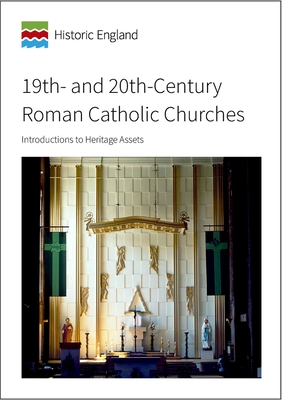
19th- And 20th-Century Roman Catholic Churches: Introductions to Heritage Assets (Historic England Guidance)
Current price:
$51.99
Publish Date:
Publisher:
Historic England
ISBN:
9781848024984
Pages:
24
Language:
English
Special Order - Subject to Availability
Description
For over two hundred years after the Act of Uniformity (1559) outward observance of the Roman Catholic faith was illegal in England. The building of public places of worship did not resume until the end of the 18th century, gathering pace after Catholic Emancipation (1829) and the restoration of the hierarchy (1850).
The 20th century saw accelerated expansion. This is therefore a relatively modern building stock, with approximately two thirds of more than 3,000 churches dating from the 20th century, and from the 1950s and 1960s in particular. Although there are stylistic crossovers with Anglican and, to a lesser extent, Nonconformist church design, Catholic churches have a distinct character, driven in large part by liturgical function. The building type has evolved over the years to meet changing liturgical and other needs.
Today, a decline in the number of priests and demographic and pastoral change means that many Catholic churches face an uncertain future.
This introduction to Heritage Assets concerns public places of parish worship. It does not consider private or institutional chapels, or those attached to convents and monasteries.
Other Books in Series

Mineralised Plant and Invertebrate Remains: A Guide to the Identification of Calcium Phosphate Replaced Remains (Historic England Guidance)
Paperback
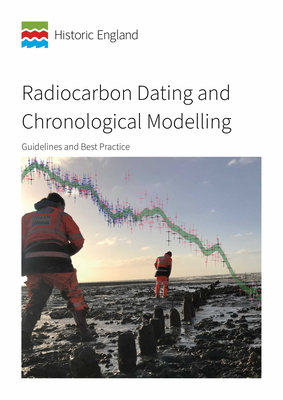
Radiocarbon Dating and Chronological Modelling: Guidelines and Best Practice (Historic England Guidance)
Paperback
Ships and Boats: Prehistory to Present: Designation Selection Guide (Historic England Guidance)
Paperback
Guidance for Tendered Projects: Heritage Protection Commissions Programme (Historic England Guidance)
Paperback
Guidance for Grants Projects: Heritage Protection Commissions Programme (Historic England Guidance)
Paperback
Preserving Archaeological Remains: Appendix 4 - Water Monitoring for Archaeological Sites (Historic England Guidance)
Paperback
Public Art 1945-95: Introductions to Heritage Assets (Historic England Guidance)
Paperback

Repointing Brick and Stone Walls: Guidelines for Best Practice (Historic England Guidance)
Paperback

Using Airborne Lidar in Archaeological Survey: The Light Fantastic (Historic England Guidance)
Paperback
Energy Efficiency and Historic Buildings: Energy Performance Certificates (Historic England Guidance)
Paperback
Energy Efficiency and Historic Buildings: Heat Pumps (Historic England Guidance)
Paperback
Conserving Historic Water Meadows (Historic England Guidance)
Paperback
Law Courts and Courtrooms 2: Civil and Coroner's Courts: Introductions to Heritage Assets (Historic England Guidance)
Paperback

Understanding the Archaeology of Landscapes: A Guide to Good Recording Practice (Second Edition) (Historic England Guidance)
Paperback

Guidance for Sentencers: Heritage Crime (Historic England Guidance)
Paperback

Streets for All: Advice for Highway and Public Realm Works in Historic Places (Historic England Guidance)
Paperback

Vacant Historic Buildings: Guidelines on Managing Risks (Historic England Guidance)
Paperback

Stained Glass Windows: Managing Environmental Deterioration (Historic England Guidance)
Paperback

Graffiti on Historic Buildings: Removal and Prevention (Historic England Guidance)
Paperback