Close this alert

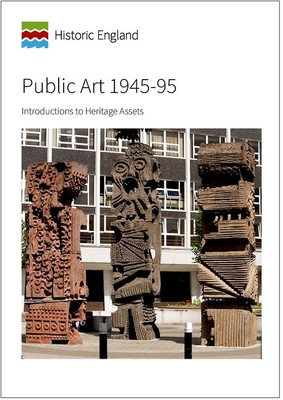
Public Art 1945-95: Introductions to Heritage Assets (Historic England Guidance)
Current price:
$51.99
Publish Date:
Publisher:
Historic England
ISBN:
9781848023970
Pages:
24
Language:
English
Special Order - Subject to Availability
Description
This short guide provides an overview of the main trends in post-war public art.
Statuary has long been a feature of our townscapes, but the proliferation of public art following the Second World War was rather different. Public art is defined here as fixed artworks which members of the public are able to access and appreciate.
Works may be sited in the public, civic, communal or commercial domain, in semi-public or privately owned public space, or within public, civic or institutional buildings. Artworks which form part of the structure or decoration of buildings may also be categorised as public art. Post-war public artworks, which number several thousand, comprise everything from abstract, fine art sculptures to concrete reliefs and fibreglass murals. They are sited not only in formal settings but also in everyday locations such as schools, shopping centres and office plazas. Their artists ranged from the internationally known to the totally unknown.
Other Books in Series

Mineralised Plant and Invertebrate Remains: A Guide to the Identification of Calcium Phosphate Replaced Remains (Historic England Guidance)
Paperback

Radiocarbon Dating and Chronological Modelling: Guidelines and Best Practice (Historic England Guidance)
Paperback
Ships and Boats: Prehistory to Present: Designation Selection Guide (Historic England Guidance)
Paperback
Guidance for Tendered Projects: Heritage Protection Commissions Programme (Historic England Guidance)
Paperback
Guidance for Grants Projects: Heritage Protection Commissions Programme (Historic England Guidance)
Paperback
Preserving Archaeological Remains: Appendix 4 - Water Monitoring for Archaeological Sites (Historic England Guidance)
Paperback
19th- And 20th-Century Roman Catholic Churches: Introductions to Heritage Assets (Historic England Guidance)
Paperback

Repointing Brick and Stone Walls: Guidelines for Best Practice (Historic England Guidance)
Paperback

Using Airborne Lidar in Archaeological Survey: The Light Fantastic (Historic England Guidance)
Paperback

Energy Efficiency and Historic Buildings: Energy Performance Certificates (Historic England Guidance)
Paperback
Energy Efficiency and Historic Buildings: Heat Pumps (Historic England Guidance)
Paperback
Conserving Historic Water Meadows (Historic England Guidance)
Paperback
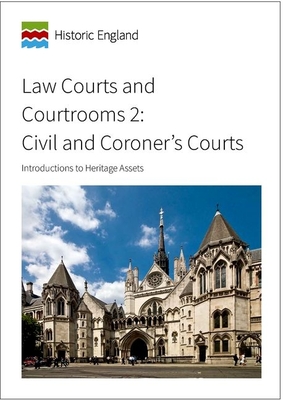
Law Courts and Courtrooms 2: Civil and Coroner's Courts: Introductions to Heritage Assets (Historic England Guidance)
Paperback

Understanding the Archaeology of Landscapes: A Guide to Good Recording Practice (Second Edition) (Historic England Guidance)
Paperback

Guidance for Sentencers: Heritage Crime (Historic England Guidance)
Paperback

Streets for All: Advice for Highway and Public Realm Works in Historic Places (Historic England Guidance)
Paperback

Vacant Historic Buildings: Guidelines on Managing Risks (Historic England Guidance)
Paperback

Stained Glass Windows: Managing Environmental Deterioration (Historic England Guidance)
Paperback

Graffiti on Historic Buildings: Removal and Prevention (Historic England Guidance)
Paperback