Close this alert

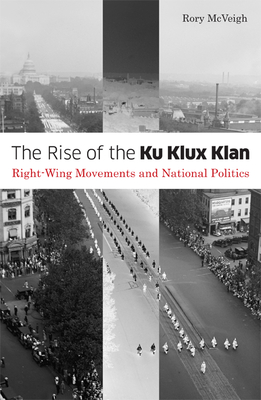
The Rise of the Ku Klux Klan: Right-Wing Movements and National Politics (Social Movements, Protest and Contention #32)
Current price:
$25.50
Publish Date:
Publisher:
Univ Of Minnesota Press
ISBN:
9780816656202
Pages:
248
Language:
English
Usually Ships in 1 to 5 Days
Description
Rediscovering the Ku Klux Klan as a national movement in the 1920s
In 1915, forty years after the original Ku Klux Klan disbanded, a former farmer, circuit preacher, and university lecturer named Colonel William Joseph Simmons revived the secret society. By the early 1920s the KKK had been transformed into a national movement with millions of dues-paying members and chapters in all of the nation’s forty-eight states. And unlike the Reconstruction-era society, the Klan in the 1920s exerted its influence far beyond the South.
In The Rise of the Ku Klux Klan, Rory McVeigh provides a revealing analysis of the broad social agenda of 1920s-era KKK, showing that although the organization continued to promote white supremacy, it also addressed a surprisingly wide range of social and economic issues, targeting immigrants and, particularly, Catholics, as well as African Americans, as dangers to American society. In sharp contrast to earlier studies of the KKK, which focus on the local or regional level, McVeigh treats the Klan as it saw itself—as a national organization concerned with national issues. Drawing on extensive research into the Klan’s national publication, the Imperial Night-Hawk, he traces the ways in which Klan leaders interpreted national issues and how they attempted—and finally failed—to influence national politics.
More broadly, in detailing the Klan’s expansion in the early 1920s and its collapse by the end of the decade, McVeigh ultimately sheds light on the dynamics that fuel contemporary right-wing social movements that similarly blur the line between race, religion, and values.
Other Books in Series

Out in Africa: LGBT Organizing in Namibia and South Africa (Social Movements, Protest and Contention #38)
Paperback

Globalization From Below: Transnational Activists And Protest Networks (Social Movements, Protest and Contention #26)
Paperback
Unraveling the Garment Industry: Transnational Organizing and Women’s Work (Social Movements, Protest and Contention #27)
Paperback

Contested Citizenship: Immigration and Cultural Diversity in Europe (Social Movements, Protest and Contention #25)
Paperback

The Politics of Social Protest: Comparative Perspectives on States and Social Movements (Social Movements, Protest and Contention #3)
Paperback

Rhyming Hope and History: Activists, Academics, and Social Movement Scholarship (Social Movements, Protest and Contention #24)
Paperback
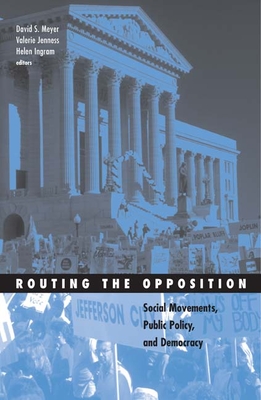
Routing the Opposition: Social Movements, Public Policy, and Democracy (Social Movements, Protest and Contention #23)
Paperback

Identity Work in Social Movements (Social Movements, Protest and Contention #30)
Paperback

How the Religious Right Shaped Lesbian and Gay Activism (Social Movements, Protest and Contention #31)
Paperback

Strategies for Social Change (Social Movements, Protest and Contention #37)
Paperback

Repression And Mobilization (Social Movements, Protest and Contention #21)
Paperback

The World Says No to War: Demonstrations against the War on Iraq (Social Movements, Protest and Contention #33)
Paperback

Between Feminism and Islam: Human Rights and Sharia Law in Morocco (Social Movements, Protest and Contention)
Paperback

Fighting for the Future of Food: Activists versus Agribusiness in the Struggle over Biotechnology (Social Movements, Protest and Contention #35)
Paperback

Strategic Alliances: Coalition Building and Social Movements (Social Movements, Protest and Contention #34)
Paperback

Solidarity And Contention: Networks Of Polish Opposition (Social Movements, Protest and Contention #18)
Paperback

Restructuring World Politics: Transnational Social Movements, Networks, And Norms (Social Movements, Protest and Contention #14)
Paperback

Challenging Authority: The Historical Study Of Contentious Politics (Social Movements, Protest and Contention #7)
Paperback

Protesting Culture and Economics in Western Europe: New Cleavages in Left and Right Politics (Social Movements, Protest and Contention #41)
Paperback