Close this alert

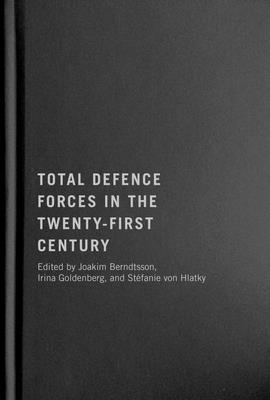
Total Defence Forces in the Twenty-First Century (Human Dimensions In Foreign Policy, Military Studies, And Security Studies Series #20)
Current price:
$140.00
Publish Date:
Publisher:
McGill-Queen's University Press
ISBN:
9780228019282
Pages:
448
Language:
English
Usually Ships in 1 to 5 Days
Description
Total defence, as a concept, combines and extends military and civil defence: in a state of war or emergency, all social institutions mobilize to defend the state. Total defence forces, led by a diverse workforce of defence and security professionals, are critical to both national defence and international security goals. Total Defence Forces in the Twenty-First Century looks at the various groups that make up this workforce: members of the military’s regular force, reservists, defence civil servants, and contractors working for private military and security companies. When civilian staff and military personnel work towards a common goal, their distinct professional cultures and identities can make integration challenging. Despite the often high levels of partnership, underlying differences affect the quality of the collaboration and, ultimately, organizational and operational effectiveness. Defence ministries around the world are increasingly recognizing the importance of optimizing the ways in which they employ and integrate civilian and military personnel. This volume focuses on a critical question: what are the main challenges to workforce integration and collaboration, and how can such challenges be overcome to deliver the full potential of the total defence force? Together, scholars and practitioners provide some answers.
Praise for Total Defence Forces in the Twenty-First Century (Human Dimensions In Foreign Policy, Military Studies, And Security Studies Series #20)
“Total Defence Forces in the Twenty-First Century provides a very rich analysis of the changed landscape of the wider defence sector and will prove a gold mine for much future research.” Andrea Ellner, co-editor of When Soldiers Say No: Selective Conscientious Objection in the Modern Military
“This volume tackles a highly topical theme: analyzing change dynamics in the organization of defence establishments. Recent international events underscore the need to understand how warfare has changed and to unpack the implications for the operations of military forces and the organization of national defence.” Jozef Bátora, co-author of Fringe Players and the Diplomatic Order: The 'New' Heteronomy
Other Books in Series
Countering Violent Extremism and Terrorism: Assessing Domestic and International Strategies (Human Dimensions In Foreign Policy, Military Studies, And Security Studies Series #8)
Paperback
War Memories: Commemoration, Recollections, and Writings on War (Human Dimensions In Foreign Policy, Military Studies, And Security Studies Series #3)
Paperback
Transhumanizing War: Performance Enhancement and the Implications for Policy, Society, and the Soldier (Human Dimensions In Foreign Policy, Military Studies, And Security Studies Series #9)
Hardcover
Total Defence Forces in the Twenty-First Century (Human Dimensions In Foreign Policy, Military Studies, And Security Studies Series #20)
Paperback
Canada as Statebuilder?: Development and Reconstruction Efforts in Afghanistan (Human Dimensions In Foreign Policy, Military Studies, And Security Studies Series #14)
Paperback
Why We Fight: New Approaches to the Human Dimension of Warfare (Human Dimensions In Foreign Policy, Military Studies, And Security Studies Series #12)
Paperback
Women, Peace, and Security: Feminist Perspectives on International Security (Human Dimensions In Foreign Policy, Military Studies, And Security Studies Series #15)
Paperback
Outsourcing Control: The Politics of International Migration Cooperation (Human Dimensions In Foreign Policy, Military Studies, And Security Studies Series #13)
Hardcover

Disarmament under International Law (Human Dimensions In Foreign Policy, Military Studies, And Security Studies Series #4)
Paperback
War and Remembrance: Recollecting and Representing War (Human Dimensions In Foreign Policy, Military Studies, And Security Studies Series #18)
Hardcover
The Ones We Let Down: Toxic Leadership Culture and Gender Integration in the Canadian Forces (Human Dimensions In Foreign Policy, Military Studies, And Security Studies Series #16)
Paperback
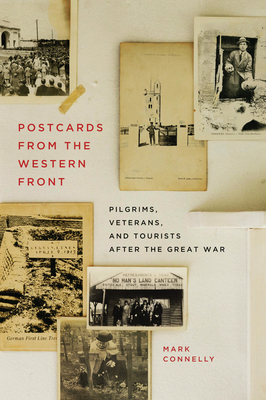
Postcards from the Western Front: Pilgrims, Veterans, and Tourists after the Great War (Human Dimensions In Foreign Policy, Military Studies, And Security Studies Series #17)
Paperback
The Power of Diversity in the Armed Forces: International Perspectives on Immigrant Participation in the Military (Human Dimensions In Foreign Policy, Military Studies, And Security Studies Series #19)
Hardcover
The Power of Diversity in the Armed Forces: International Perspectives on Immigrant Participation in the Military (Human Dimensions In Foreign Policy, Military Studies, And Security Studies Series #19)
Paperback
Frontline Justice: The Evolution and Reform of Summary Trials in the Canadian Armed Forces (Human Dimensions In Foreign Policy, Military Studies, And Security Studies Series #7)
Hardcover
Transhumanizing War: Performance Enhancement and the Implications for Policy, Society, and the Soldier (Human Dimensions In Foreign Policy, Military Studies, And Security Studies Series #9)
Paperback
Frontline Justice: The Evolution and Reform of Summary Trials in the Canadian Armed Forces (Human Dimensions In Foreign Policy, Military Studies, And Security Studies Series #7)
Paperback

Rivals in Arms: The Rise of UK-France Defence Relations in the Twenty-First Century (Human Dimensions In Foreign Policy, Military Studies, And Security Studies Series #10)
Paperback
Coping with Geopolitical Decline: The United States in European Perspective (Human Dimensions In Foreign Policy, Military Studies, And Security Studies Series #11)
Paperback