Close this alert

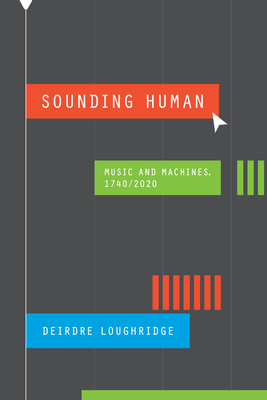
Sounding Human: Music and Machines, 1740/2020 (New Material Histories of Music)
Current price:
$35.00
Publish Date:
Publisher:
University of Chicago Press
ISBN:
9780226830117
Pages:
256
Language:
English
Usually Ships in 1 to 5 Days
Description
An expansive analysis of the relationship between human and machine in music.
From the mid-eighteenth century on, there was a logic at work in musical discourse and practice: human or machine. That discourse defined a boundary of absolute difference between human and machine, with a recurrent practice of parsing “human” musicality from its “merely mechanical” simulations. In Sounding Human, Deirdre Loughridge tests and traverses these boundaries, unmaking the “human or machine” logic and seeking out others, better characterized by conjunctions such as and or with.
Sounding Human enters the debate on posthumanism and human-machine relationships in music, exploring how categories of human and machine have been continually renegotiated over the centuries. Loughridge expertly traces this debate from the 1737 invention of what became the first musical android to the creation of a “sound wave instrument” by a British electronic music composer in the 1960s, and the chopped and pitched vocals produced by sampling singers’ voices in modern pop music. From music-generating computer programs to older musical instruments and music notation, Sounding Human shows how machines have always actively shaped the act of music composition. In doing so, Loughridge reveals how musical artifacts have been—or can be—used to help explain and contest what it is to be human.
Praise for Sounding Human: Music and Machines, 1740/2020 (New Material Histories of Music)
“In this dexterous book, Loughridge traces the seams in our understanding of humans and machines. Gathering examples from the eighteenth century to the twenty-first, Sounding Human illustrates how musical technologies have provided new models for thinking about some of our deepest philosophical questions. Loughridge writes as masterfully about bells and harpsichords as she does about vocoders and neural nets, making clear that the boundary between people and devices has never been as clear as it seems.”
— Nick Seaver, Tufts University
“Loughridge’s brilliant and elegant book delves into the foundational relationships between humans, machines, and music. Through an array of case studies covering more than three centuries, she exposes the impossibility of drawing divisions between humans and their mechanical companions. Loughridge shows the ways in which modern ideas of what makes us (sound) human were forged precisely through repeated negotiations with machines.”
— Emily Dolan, Brown University
"Thought-provoking. . . Sounding Human offers a compelling reexamination of the entanglements of humans and machines in making and thinking about music."
— Technology and Culture
"In Sounding Human, Deirdre Loughridge explores the evolving boundary between human and machine through a posthuman lens, grounding her analysis in historical context. . . [Loughridge] addresses a critical gap in the literature by offering a nuanced and historically grounded study of how musical technologies shape perceptions of human and machine creativity. Loughridge’s text opens the field for further scholarly inquiry, as the rapidly evolving fields of AI and machine music continue to raise new questions about creativity, agency, and the nature of music itself."
— Notes: the Quarterly Journal of the Music Library Association
Other Books in Series

Performing Politics: Music and Theater in Berlin Around 1800 (New Material Histories of Music)
Hardcover

Instruments of Music Theory (New Material Histories of Music)
Paperback
Format Friction: Perspectives on the Shellac Disc (New Material Histories of Music)
Hardcover
The Composer Embalmed: Relic Culture from Piety to Kitsch (New Material Histories of Music)
Hardcover
Sounding Human: Music and Machines, 1740/2020 (New Material Histories of Music)
Hardcover
The Composer Embalmed: Relic Culture from Piety to Kitsch (New Material Histories of Music)
Paperback
Sex, Death, and Minuets: Anna Magdalena Bach and Her Musical Notebooks (New Material Histories of Music)
Hardcover

Mozart and the Mediation of Childhood (New Material Histories of Music)
Hardcover
An Unnatural Attitude: Phenomenology in Weimar Musical Thought (New Material Histories of Music)
Hardcover
Music in the Flesh: An Early Modern Musical Physiology (New Material Histories of Music)
Hardcover
Tuning the World: The Rise of 440 Hertz in Music, Science, and Politics, 1859–1955 (New Material Histories of Music)
Hardcover

Listening to China: Sound and the Sino-Western Encounter, 1770-1839 (New Material Histories of Music)
Hardcover
The Voice as Something More: Essays toward Materiality (New Material Histories of Music)
Hardcover
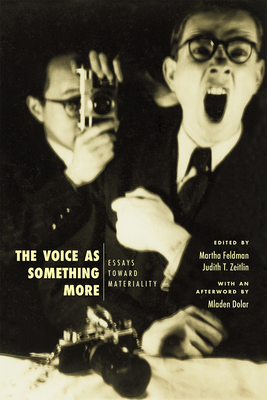
The Voice as Something More: Essays toward Materiality (New Material Histories of Music)
Paperback
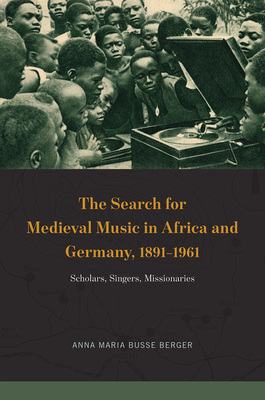
The Search for Medieval Music in Africa and Germany, 1891-1961: Scholars, Singers, Missionaries (New Material Histories of Music)
Hardcover
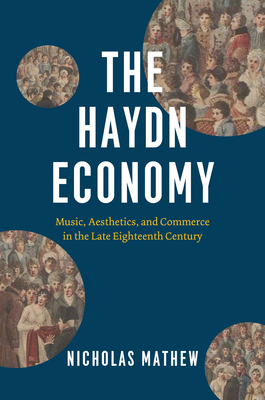
The Haydn Economy: Music, Aesthetics, and Commerce in the Late Eighteenth Century (New Material Histories of Music)
Hardcover
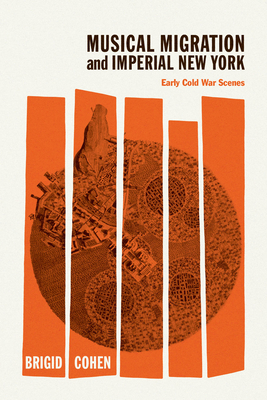
Musical Migration and Imperial New York: Early Cold War Scenes (New Material Histories of Music)
Hardcover
Creatures of the Air: Music, Atlantic Spirits, Breath, 1817–1913 (New Material Histories of Music)
Hardcover
Format Friction: Perspectives on the Shellac Disc (New Material Histories of Music)
Paperback