Close this alert

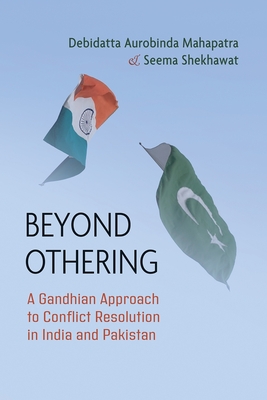
Mohandas K. Gandhi opposed the 1947 partition of British India that created two independent states of India and Pakistan, as he believed that partition politics, rooted in the psychology of othering, would turn South Asia into a near permanent conflict zone. His apprehension was not without basis...
Read More about Beyond Othering: A Gandhian Approach to Conflict Resolution in India and Pakistan (Syracuse Studies on Peace and Conflict Resolution)Usually Ships in 1 to 5 Days
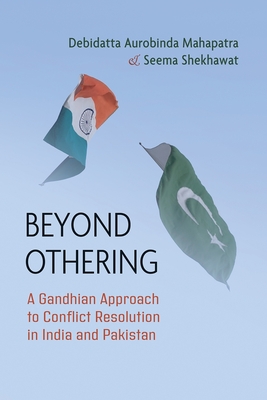
Mohandas K. Gandhi opposed the 1947 partition of British India that created two independent states of India and Pakistan, as he believed that partition politics, rooted in the psychology of othering, would turn South Asia into a near permanent conflict zone. His apprehension was not without basis...
Read More about Beyond Othering: A Gandhian Approach to Conflict Resolution in India and Pakistan (Syracuse Studies on Peace and Conflict Resolution)Usually Ships in 1 to 5 Days
Current price: $150.00
There is an increasing amount of literature on various aspects of United Nations Security Council Resolution 1325. While appreciating this scholarship, this volume highlights some of the omissions and concerns to make a quality addition to the ongoing discourse on the intersection of gender with...
Read More about Gender, Conflict, Peace, and Unsc Resolution 1325Usually Ships in 1 to 5 Days
Current price: $48.95
There is an increasing amount of literature on various aspects of United Nations Security Council Resolution 1325. While appreciating this scholarship, this volume highlights some of the omissions and concerns to make a quality addition to the ongoing discourse on the intersection of gender with...
Read More about Gender, Conflict, Peace, and Unsc Resolution 1325Usually Ships in 1 to 5 Days
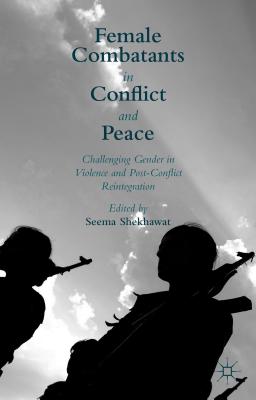
This edited volume illuminates the role of women in violence to demonstrate that gender is a key component of discourse on conflict and peace. Through an examination of theory and practice of women's participation in violent conflicts, the book makes the argument that both conflict and post-conflict...
Read More about Female Combatants in Conflict and Peace: Challenging Gender in Violence and Post-Conflict ReintegrationUsually Ships in 1 to 5 Days
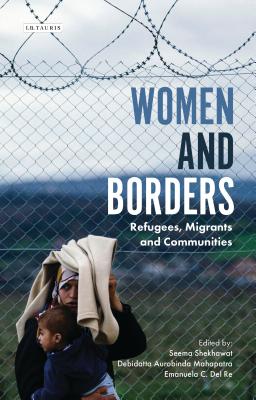
Borders - whether settled or contested, violent or calm, closed or open - may have a direct, and often acute, human impact. Those affected may be people living nearby, those attempting to cross them and even those who succeed in doing so. At the border, vulnerable refugee and migrant communities...
Read More about Women and Borders: Refugees, Migrants and Communities (International Library of Migration Studies)Usually Ships in 1 to 5 Days
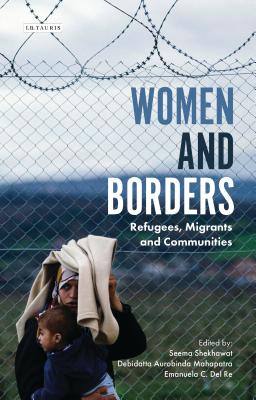
Borders - whether settled or contested, violent or calm, closed or open - may have a direct, and often acute, human impact. Those affected may be people living nearby, those attempting to cross them and even those who succeed in doing so. At the border, vulnerable refugee and migrant communities...
Read More about Women and Borders: Refugees, Migrants and Communities (International Library of Migration Studies)Usually Ships in 1 to 5 Days
Current price: $44.75
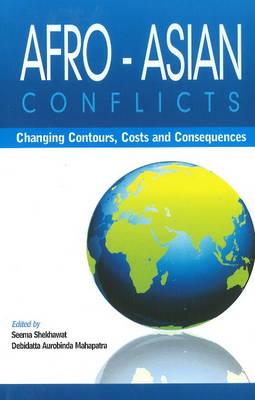
The issues of conflict and peace are of immense relevance in the post-Cold War scenario, which has witnessed an unprecedented rise in violent conflicts locally, yet with global ramifications. Oftentimes the conflicts have been protracted with horrendous consequences. This volume looks at some of the...
Read More about Afro-Asian Conflicts: Changing Contours, Costs and ConsequencesSpecial Order - Subject to Availability
Current price: $100.00
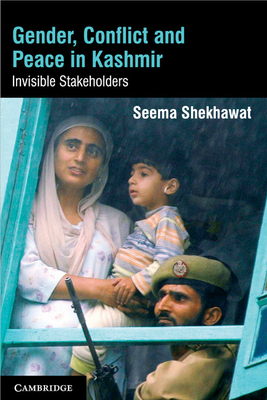
This book demonstrates that gender is a key component of conflict and peace discourse. The marginalization of women in conflict and peace is all pervasive. Kashmir is a mirror image of this global scenario. Kashmiri women aided the militant movement in significant ways though they did not take part...
Read More about Gender, Conflict and Peace in Kashmir: Invisible StakeholdersSpecial Order - Subject to Availability